Coming Soon— Sign up below to get notified when registration opens.
liberationwellbeingworldbuildingComing Soon

Tending to the Roots of Conflict in a Divided World

Deepen your capacity to unearth and tend to the unconscious beliefs, protective patterns, and survival strategies at the root of conflict, division, dehumanization, and polarization.

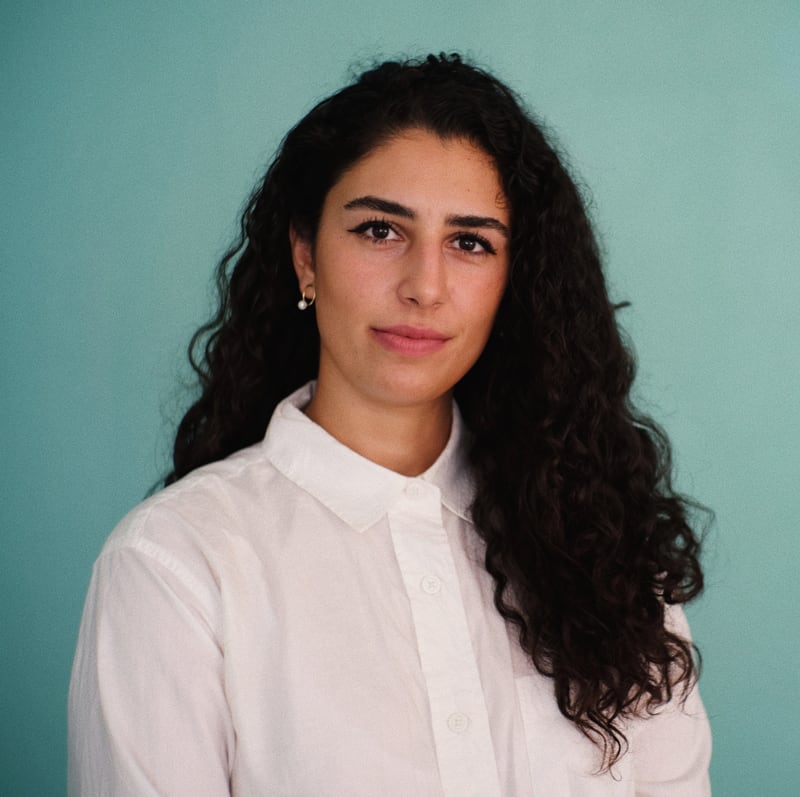
Taught by Lena Papadopoulos
Live Online8 sessions x 120 min

Course Overview

Most approaches to conflict and systemic harm focus on the external, without addressing the deeper fears and desires that keep these larger patterns in place.

Through a trauma-informed process of guided self-inquiry and embodied exploration, participants in this course will gain a personally transformative, in-depth understanding of how self-suppression sustains the oppressive systems that shape our personal and collective realities.

By illuminating how these hidden patterns shape your sense of self, your relationships with others, and the wider web we all belong to, you will gain invaluable insights into what *really* drives conflict while building your capacity to address the roots of division in your life and in our world.

Civil rights activist James Baldwin said, “I imagine one of the reasons people cling to their hatred so stubbornly is because they sense, once hate is gone, they will be forced to deal with pain.” Unless we learn how to confront that pain, we'll only create more of the same.

Who Is This Course For?

This course is designed for heart-centered, purpose-driven peacebuilding practitioners, humanitarians, educators, cross-cultural mediators, bridge-builders, activists, creatives, changemakers, and movement leaders.

What You'll Learn

  • Unearth unconscious beliefs and patterns that perpetuate division and dehumanization
  • Identify how internalized oppression operates in your life and leadership—and how it sustains larger systems of harm
  • Develop embodied awareness of how conflict and survival responses live in your body, and learn practices to regulate and shift them
  • Expand your capacity for bridge-building across differences by first bridging within yourself
  • Engage conflict with greater emotional depth, accountability, and relational awareness
  • Translate personal awareness into context-sensitive approaches for facilitating dialogue, repair, or reconciliation on a wider scale

What's Included

Live Sessions

Interactive classes with your instructor

Session Recordings

Lifetime access to all recordings

Community Access

Connect with fellow learners

Certificate

Proof of course completion

Real-World Project

Participants will create a final integration artifact that bridges personal insight with collective understanding and application. Through a medium of their choice (e.g., written essay, audio recording, social media / blog post, etc), participants will explore a previously suppressed or hidden aspect of themselves and examine how it shapes: *Their internal experience (beliefs, emotional patterns, protective behaviors) *Their relationships (communication, conflict, disconnection, or repair) *Their understanding of larger systems (how this pattern shows up in collective dynamics around power, oppression, or polarization) In addition, each participant will identify and share how they intend to interrupt or work with this pattern in their own life and leadership, as well as why that matters for the world they are committed to creating.

About the Instructor

Lena Papadopoulos

Award-winning educator and leadership coach working at the intersection of personal and collective liberation

As a first-generation Greek-American with a family history of genocide and displacement, my graduate research centered on the role of religion and national identity in war and conflict. I spent 15 years working at the intersections of global citizenship education, leadership development, and cross-cultural community building. Over time, I came to see that the divisions between us reflect the disconnect within us. The work I do now addresses that disconnection first, because we can’t dismantle oppressive systems outside of us without confronting how they’ve taken root within us. My approach is human-centered, trauma-informed, and reflects a unique blend of my background in sociology, psychology, cultural anthropology, intercultural education, leadership development, life coaching, and somatic trauma resolution. I’ve been recognized for my commitment to personalized experiences and successful efforts in humanizing communities.

Get Notified

Sign up to be notified when registration opens.

Format

Live Online

Class Size

15 students max

Sessions

8 sessions

Duration

120 min each

You Might Also Like

Coming Soon

The World on our Plates: Culture, Politics, and Food Systems

This course takes as its starting point something we all need in order to survive - food - and examines how the personal is entwined with the social and the political. It must be clear this is not a course on “clean” eating or dieting - rather, it aims to examine how our individual choices are shaped by the larger food systems around us. Together, we will examine the various systems and processes leading to the food that ends up on our plates - where it comes from, what it is made up of, who is involved in putting it together - to reflect on larger questions around culture, cuisine, and community. Figuratively speaking, we are less interested in the breaking of bread than in the actual baking of bread. That is to say, whilst the symbolic and cultural elements of food are generally known, this course aims to focus squarely on the material dimensions of how food is made. We will consider how questions around labour, migration, race & gender, coloniality, capitalism and the climate crisis are wrapped up in the production of food. Together, we'll consider how our choices around the food we consume are shaped by the larger social and political contexts we are a part of. We'll see how these contexts affect our lives - not just nutritionally, but socially and environmentally as well. Our weekly sessions will culminate in a bread-making workshop led by Josefina Venegas Meza, a professional baker & pastry chef who has worked in some of London's best kitchens. In addition to acquiring a practical and valuable skill, we intend this practise-based session to function as an opportunity to personally reflect on the various topics we've covered together, and how they might apply in our individual lives. You will also receive a comprehensive and exclusive bread-making handbook with all the essential information you might need to refer back to should you wish to continue baking in future.

LiberationWellbeingWorldbuilding
Josefina Venegas Meza, PhDPavan Mano, PhD
Josefina Venegas Meza, PhD & Pavan Mano, PhD
Live Online25 students max8 sessions
Coming Soon

Relational Leadership as Design

Course Description This course invites learners to shift from the Status Quo Paradigm (positional authority, extractive practices, and metric driven decision making) into a Relational Paradigm where leadership is understood as a collective capacity, not an individual role. Participants reimagine leadership as something we build with communities rather than perform over them. At the heart of the course are four guiding themes: Power, Ethics, Truth, and Reciprocity, which serve as a diagnostic tool for understanding how leadership shows up in real time. Participants will explore how these themes operate across the seasonal cycles of sustainable leadership, moving from rest to experimentation, action, and harvest. This seasonal lens challenges the myth of “eternal summer” and supports leaders in cultivating practices that prevent burnout and strengthen long term resilience. What the course is about • Shifting from hierarchical, extractive leadership models to relational, community centered ones • Understanding leadership as a social, collective process rooted in trust, reciprocity, and shared responsibility • Exploring how power, ethics, truth, and reciprocity shape leadership decisions • Practicing sustainable leadership through seasonal cycles rather than constant output • Building relational culture as organizational infrastructure Topics covered • The Relational Leadership Design Framework o Principles and pillars that define relational, liberatory leadership o How collective sensemaking, cultural grounding, and shared power function in practice • The BAL Framework (Boundaries, Alerts, Limits) o A practical tool for sustainable leadership and preventing burnout o How to use BAL to maintain integrity, clarity, and relational alignment • Relational Culture Building o Designing conditions for belonging, psychological safety, and mutual accountability o Understanding culture as structural architecture, not interpersonal preference • Seasonal Leadership Cycles o Embracing rhythms of rest, experimentation, action, and reflection o Rejecting extractive norms that demand constant productivity Why this course matters right now Across sectors, leaders are navigating fragmentation, burnout, polarization, and rapid change. Traditional leadership models, which are rooted in hierarchy, individualism, and control, are no longer sufficient for the complexity of today’s world. Communities and organizations need leaders who can design systems needed for communities and institutions to thrive amid complexity, disruption, and change This course offers a timely, necessary alternative: a relational, lineage rooted, and sustainable approach to leadership that strengthens collective capacity and supports systems level transformation.

LiberationWorldbuildingWellbeing
Sharon Attipoe-Dorcoo, PhD
Sharon Attipoe-Dorcoo, PhD · Transforming Data and Lived Experiences into Strategic Clarity and Direction
Live Online25 students max4 sessions
Coming Soon

Beyond Sustainability: Connection, Wisdom, and Regenerative Leadership

We are living in a time when environmental conversations are often dominated by crisis, urgency, and fear. The narratives we hear most frequently focus on collapse, destruction, and emergency. While these realities cannot be ignored, constantly operating from this place can leave us feeling overwhelmed, drained, and powerless. What if there was another way to engage with this work? This course invites you to explore the environmental and sustainability space from a different perspective, one rooted in empowerment, connection, and renewal rather than stress and overwhelm. Over time, the sustainability field has increasingly been shaped by institutions, corporations, and NGOs. While many important efforts happen within these spaces, the deeper essence of environmental stewardship, the relationship between people, land, culture, and ancestral knowledge, can sometimes get lost. This course creates space to reconnect with that essence. Rather than approaching sustainability purely as an intellectual or technical subject, we will explore how to embody other ways of being that allow us to engage with the environmental field from a place of authenticity, care, and inspiration. Drawing from environmental psychology, behavioral change, storytelling, and ancestral wisdom, participants will explore how inner transformation can lead to more meaningful external impact. When we lead from this place, we are able to contribute to healthier systems while showing up with less guilt, less pressure, and more clarity, purpose, and power. By the end of the course, you will feel more empowered to engage with environmental work from a place of inspiration, grounded in a deeper connection to the land, to community, and to the wisdom that has guided humans for generations. Throughout the course, we will reflect on questions such as: - How can we engage with environmental work from a deeper, more life-affirming place that invites both ourselves and others into the conversation? - How can we move from intellectual understanding to embodied practice in sustainability? - How can personal transformation shape broader transformation in global systems? - How can we design and share initiatives, ideas, or projects that emerge from inspiration and authenticity rather than pressure or urgency? - How can we lead and communicate in ways that reconnect people to the land and to each other?

WellbeingNarrativeLiberation
Najla Abdellatif Vallander
Najla Abdellatif Vallander · Environmental Advocate
Live Online25 students max4 sessions

Join our mailing list

Stay updated on new courses and events.