Coming Soon— Sign up below to get notified when registration opens.
liberationComing Soon

Decolonial Feminist Approaches to Foreign Policy

learn about decolonial feminist approaches to foreign policy and reflect on how you, in a deeply interconnected world, can navigate global politics by interrogating power and sowing seeds for softer and gentler alternatives.

Taught by kirthi jayakumar
Live Online6 sessions x 120 min

Course Overview

since 2014, several countries and multilateral blocks have either adopted or committed to adopting Feminist Foreign Policies. however, a lot more needs to be done in prioritizing feminism in feminist foreign policies. while some have chosen to continue dispensing aid, some chose to add women and stir. instead of choosing to engage with feminist values and focusing on intersectionality and peace, most policies continued to normalize “feminism-lite” agendas. in reality, women and non-binary people in the global south have been "doing" feminist foreign policy for generations now. movements ranging from resisting colonialism to practicing food sovereignty, from inclusive lawmaking to deploying international law in pushing for their rights - the wealth of knowledge embodied in praxis in the majority world must be centered. all of this continues alongside major shifts in geopolitics with the proliferation of technology. what might it mean to truly embed feminist principles into foreign policy? this course takes a deep dive into the field to build strong understandings of feminist foreign policy as a concept. it offers a comprehensive overview of feminist foreign policies as they exist, presents the building blocks of such policies, and presents lessons from rich examples from the majority world.

in this course, participants will:

  • understand the violent roots of the current template for international relations and foreign policy
  • understand how states are not the only actors in foreign policy spaces and reflect on how we can open up spaces for the entire continuum of actors to be represented in how foreign policy is practiced.
  • understand the relationship between power and the state, which underpins contemporary international relations, and start to build a practice of interrogating it
  • understand the nexus between gender and the state, and in international relations, to unpack how feminist foreign policies are currently built and implemented.
  • explore building blocks for feminist foreign policy from the majority world that can bring the transformative potential of truly feminist foreign policies alive.
  • learn from real-life examples of transformative feminist foreign policies in practice, drawn across time and space, from the breadth of the majority world.
  • move toward implementing learnings from the program into action through the use of tools and approaches to build and implement feminist foreign policies.

Who Is This Course For?

  • activists seeking to expand their theoretical knowledge and analysis
  • students / practitioners of international relations, international law, diplomacy
  • students / practitioners of the women, peace, and security agenda
  • anyone with an interest in geopolitics and foreign policy

What You'll Learn

  • Participants will gain an understanding of decolonial, intersectional feminist approaches to foreign policy
  • Participants will build a capacity to reflect on topics like power, and systemic and structural violence
  • Participants will learn about decolonial feminist approaches to foreign policy from the majority world

What's Included

Live Sessions

Interactive classes with your instructor

Session Recordings

Lifetime access to all recordings

Community Access

Connect with fellow learners

Certificate

Proof of course completion

Real-World Project

Learners will complete a creative piece that presents their reflection on the learnings from the course: They can define the output themselves, it could be a blog post, a video reflection, a piece of art. The output will be published on www.civitatemresolutions.com if they consent to it.

About the Instructor

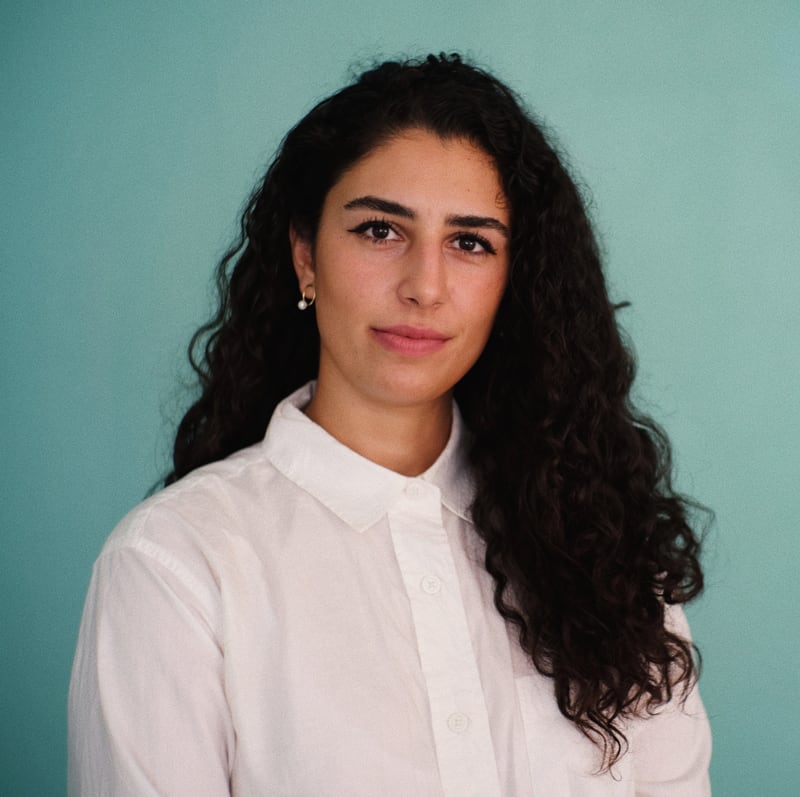
kirthi jayakumar

researcher

kirthi jayakumar runs civitatem resolutions. she focuses on emerging technologies and their intersections with feminist foreign policy and women, peace, and security.

Frequently Asked Questions

Not at all! We welcome anyone with an interest in the field - regardless of your level of prior knowledge, this course will offer a good grounding in an approach to feminist foreign policy.
The course invites you to come as you are: Our intent is for this course to fit your life rather than the other way around. participants in the past told us they spent a minimum of 2.5 hours (live session duration + 15 mins before and after to enter and leave the call) to a maximum of 5 hours (covering readings and other recommended resources) per session.

Get Notified

Sign up to be notified when registration opens.

Format

Live Online

Class Size

25 students max

Sessions

6 sessions

Duration

120 min each

You Might Also Like

Coming Soon

Capitalism vs. Love

An exploration of the fundamental tension between capitalist logic and our human need for love, connection, and community. This course examines how economic systems shape our personal lives including our identities, bodies and relationships, and how we can reclaim love as a revolutionary force.

Liberation
Laura Basu, PhD
Laura Basu, PhD · Independent Scholar
Live Online25 students max
Coming Soon

Engaging in Feedback Dialogues for Liberation

Feedback is often positioned as a tool for effectiveness, productivity, improvement, which denote a certain performative culture and which can be experienced as monological and judgement. Yet feedback should be first and foremost an opportunity for authentic dialogue, for people of all contexts to encounter suggestions, questions, words of advice and wisdom and sometimes dissonances. These conversations, when embedded in brave spaces, can be liberating and emancipatory. Drawing from Paulo Freire's dialogic attributes, this course explores the potential of relational feedback encounters grounded in pedagogy of liberation. It will support people in encountering the tension between suggestion and accountability. Drawing on doctoral research into student (dis)engagement with feedback, the course offers a nuanced exploration of why people sometimes ignore, resist, or emotionally disengage from the very feedback intended to support them. Rather than treating feedback as a technical instrument (a set of comments to improve performance), we examine it as a relational encounter. Feedback is not simply transmitted; it is received, interpreted, felt, negotiated, and often transformed. When framed as a dialogical experience, feedback becomes a site of meaning-making shaped by emotion, identity, power, and context. This shift opens possibilities for deeper engagement and more sustainable practices. Participants will explore the conditions that must exist before feedback can be taken up. Because feedback must first be received (cognitively and emotionally) attention will be given to climate-building practices that foster a sense of mattering. Practical moves will be shared for supporting individuals who may be particularly sensitive to perceived criticism, including neurodivergent people with rejection sensitivity. We will investigate multiple forms of feedback dialogue: inner feedback, peer feedback, and 'expert' feedback. Additionally, we will surface often-invisible dynamics that shape engagement. Power asymmetries between people can influence whether feedback is welcomed, negotiated, or rejected. By making these dynamics visible, we can better design feedback interactions that invite participation rather than compliance. Throughout the course, participants will engage with tools, embodied teaching practices, and reflective activities designed to strengthen relationality in feedback interactions. This workshop ultimately invites all of us to rethink feedback not as a technique to perfect, but as a relational and reflexive posture.

Liberation
Sam Passeport
Sam Passeport · Relational Coach, Education Disruptor, Feminist Killjoy
Live Online20 students max4 sessions
Coming Soon

The World on our Plates: Culture, Politics, and Food Systems

This course takes as its starting point something we all need in order to survive - food - and examines how the personal is entwined with the social and the political. It must be clear this is not a course on “clean” eating or dieting - rather, it aims to examine how our individual choices are shaped by the larger food systems around us. Together, we will examine the various systems and processes leading to the food that ends up on our plates - where it comes from, what it is made up of, who is involved in putting it together - to reflect on larger questions around culture, cuisine, and community. Figuratively speaking, we are less interested in the breaking of bread than in the actual baking of bread. That is to say, whilst the symbolic and cultural elements of food are generally known, this course aims to focus squarely on the material dimensions of how food is made. We will consider how questions around labour, migration, race & gender, coloniality, capitalism and the climate crisis are wrapped up in the production of food. Together, we'll consider how our choices around the food we consume are shaped by the larger social and political contexts we are a part of. We'll see how these contexts affect our lives - not just nutritionally, but socially and environmentally as well. Our weekly sessions will culminate in a bread-making workshop led by Josefina Venegas Meza, a professional baker & pastry chef who has worked in some of London's best kitchens. In addition to acquiring a practical and valuable skill, we intend this practise-based session to function as an opportunity to personally reflect on the various topics we've covered together, and how they might apply in our individual lives. You will also receive a comprehensive and exclusive bread-making handbook with all the essential information you might need to refer back to should you wish to continue baking in future.

LiberationWellbeingWorldbuilding
Josefina Venegas Meza, PhDPavan Mano, PhD
Josefina Venegas Meza, PhD & Pavan Mano, PhD
Live Online25 students max8 sessions

Join our mailing list

Stay updated on new courses and events.