Creative Responses to Climate Collapse: Worldmaking with Art & Literature
Create and examine environmental art or literature that inspires a more life-affirming future.
Course Overview
“We are the ones we have been waiting for.” – June Jordan
Every era has its call to action. But what transformations does the climate crisis call us to? When we look for guidance, what climate stories capture our moment, and offer a sense of hope for the future? And how can we create works of art that speak to our experience of this time?
Over eight weeks, we will examine works of environmental literature and art that think through the tangled knot of troubles at the heart of climate collapse. We will investigate how colonialism, the patriarchy, racism, and capitalism contribute to our planetary crisis—and how the stories we encounter can help liberate our imprisoned hopes for the future.
Through journaling exercises, study of art and literary craft forms, discussion, and a supportive space for the development of your own project, you will identify what story or expression captures your experience of living through this era, and then bring it to life.
By the end of this course, you will have a toolkit of literary, artistic, and thematic models, be connected to a cohort of bold creators, and produce an artwork in the medium of your choice (text, visual, material, etc), carefully conceived and crafted over eight weeks of communal study. We will end the course with a project showcase and celebration.
Who Is This Course For?
→ creatives of all backgrounds looking for a space to give expression to our moment and envision otherwise
→ organizers seeking to deepen their imaginations, looking beyond grim climate facts towards radical futures
→ educators curious about exploring climate through a hybrid of critical and creative practice
→ concerned dwellers of this planet curious about what better worlds might be possible when we imagine and create collectively
What You’ll Learn
- Analyze literary texts, media, and art about the environment and climate crisis
- Understand how colonialism, patriarchy, capitalism, and racism are entangled in the crisis--and how they can block our imaginations
- Identify forms, craft elements, and themes to build from and explore in your own art project
- Produce an art project in the medium of your choosing, and express our climate present or imagine an alternate future
- Practice radical future envisioning
What’s Included
Interactive classes with your instructor
Lifetime access to all recordings
Connect with fellow learners
Proof of course completion
Course Modules
- 1Week 1 | Introduction: Climate Time, Climate Expressions
In our first session, we will get the lay of the land: our starting theme and questions, review the course, and discuss how to create a supportive class culture for our creative process.
- 2Week 2 | The Present in Crisis
Questioning the ways the present-day crisis is in tension with the past and future, and why apocalypse often seems like the only future left.
- 3Week 3 | Ghostly Pasts
Exploring how environmental pasts haunt us, how we will haunt the future, and how these ghosts might be set free.
- 4Week 4 | Radical Futures
Looking to bold visions of the future to ask how stories and art objects can help us imagine beyond sheer survival.
- 5Week 5: Individuals, Collectives, & Interspecies Stories
Examining the polar tensions that challenge environmental storytellers--individual versus collective, local versus planetary, human versus non-human.
- 6Week 6: Ancestors & Archives
Looking to archives, memorials, and ancestral resources to honor pasts and enliven futures.
- 7Week 7: Environmental Mythologies Old & New
Reflecting on the myths we want to question, revive, or uplift for more life-affirming creations and worlds.
- 8Week 8: Projects Showcase
We meet for the last time to showcase and celebrate our works of art!
Real-World Project
Choose between an individual climate expression or future envisioning creative project (e.g. solarpunk visual or audio artwork, a piece of short climate fiction), or a collaborative community project (e.g. painting a local mural, an organizing potluck with zine-making, etc.)
Session Schedule
- 01Wed, Apr 14 · 1:00 PM – 2:30 PM ET
- 02Wed, Apr 21 · 1:00 PM – 2:30 PM ET
- 03Wed, Apr 28 · 1:00 PM – 2:30 PM ET
- 04Wed, May 5 · 1:00 PM – 2:30 PM ET
- 05Wed, May 12 · 1:00 PM – 2:30 PM ET
- 06Wed, May 19 · 1:00 PM – 2:30 PM ET
- 07Wed, May 26 · 1:00 PM – 2:30 PM ET
- 08Wed, Jun 2 · 1:00 PM – 2:30 PM ET
About the Instructor
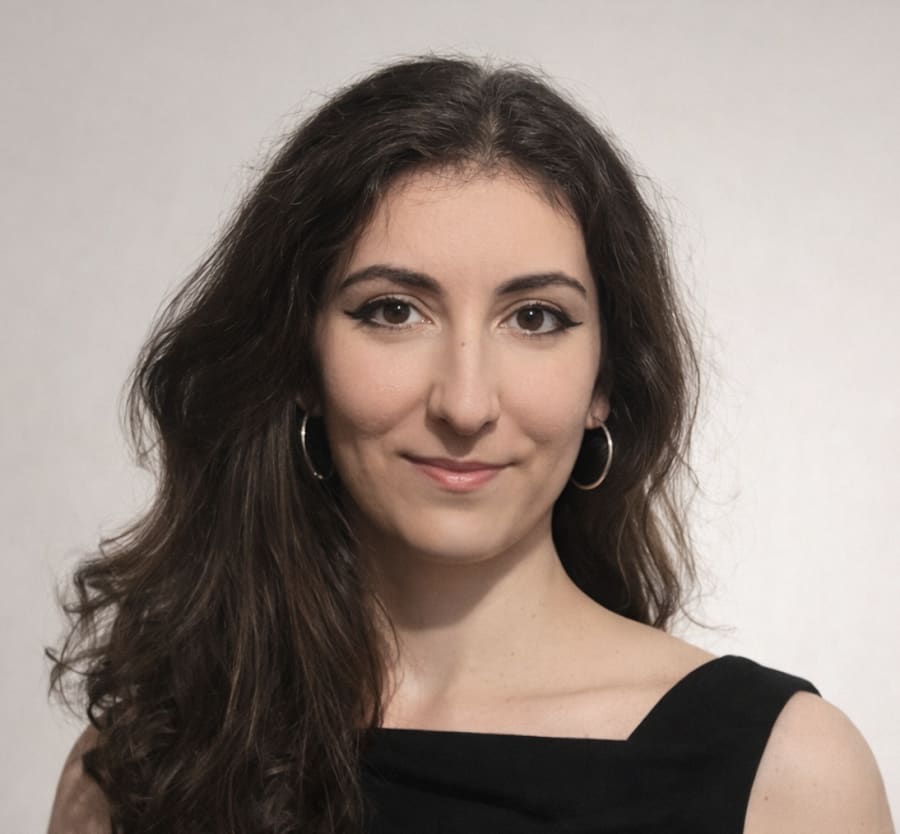
Writer & Independent Educator Exploring Liberation Pedagogy
I'm a Russian-Armenian and American writer, activist, and independent educator, currently completing my PhD in English at Harvard University. I taught for over three years at Harvard, including a speculative fiction course that won me my department's highest teaching prize. In my writing and scholarship alike, I love strange, magical, thought-provoking stories, especially those about women--so much so that I gave a talk, "Imagining Extraterrestrial Contact," for the Harvard Horizons 2022 public speaking award. In 2024, my climate fiction was a finalist for Grist's "Imagine 2200" contest. Currently, I live in Paris, where I am the founder of Liberation in Prose, my literary circle and workshop practice, and run The Paris Notebooks newsletter.
Frequently Asked Questions
Do I need to be an artist, writer, or creator to participate?
Not at all. Everyone can benefit from creative expression, and there are many forms of creativity accessible to us. This is also an opportunity for you to take on a creative practice you may have been hesitating to begin.
I have a busy schedule. Is this course reading-heavy?
No. I will assign weekly light reading or an art or media object to explore, but we will focus on examining material in-class together, where deeper reading happens. I will offer suggestions for more substantial reading and viewing, but these are optional, to be explored if you find it helpful.
Will this benefit my climate activism? How is creativity helpful?
In my work as a climate activist, and in speaking with other climate activists, journalists, and advocates, I have found creativity to be a critical component of this work. We need both to express what it means to live during fraught times, and to possess the tools to imagine better futures that we are organizing towards. Many climate advocates I know have a creative project in their spare time.
How much time will the art project take outside of class?
This will depend on the type of medium and project you choose. However, I am building in time for creative practice into the course meeting itself. After analyzing and discussing the day's material, we will work together on our projects, address any craft challenges, ideate, or, if you wish, work in silence with communal accountability.
What happens after the class ends?
We will end the course with a showcase and celebration of our creative projects. If the group wishes, we can produce a more lasting showcase of the work, such as through a zine. We will discuss these options as a group.
How is this course different from others on worldmaking and radical imagining?
The climate crisis poses unique challenges to our imaginations and creative approaches. It is both planetary yet local, it affects us all but in profoundly different ways. While the tools of envisioning otherwise are exactly what we need to confront the climate crisis, this course underscores that examining a specific crisis that affects so many parts of our lives--the weather, our food systems, our ancestral homes, interspecies relationships, the very face of the earth--is important. We are imagining and building towards other worlds from within a degraded planet.
Will there be homework or assignments?
I will provide journaling exercises to help you identify and explore your art project, and will offer light creative prompts. Before the final week of the course, I will ask everyone to submit their art project so that it can be shared with the group.
Can I produce a collaborative art project, or must it be individually made?
I encourage collectively created projects, whether they are between members of the class or with folks in your in-person community. These can be very exciting. For such projects, I also suggest building in at least week of extra time for project creation, to cover for communication times.
What if the project I want to create can't be completed within eight weeks?
If you are an experienced artist, I recommend choosing the project you feel most called to, even if it can't be completed within the course time. In this case, you would share your in-development work, and the next steps you'll be taking to complete it (group accountability goes a long way to keeping the momentum going!) However, if you are new to the art form you are exploring, I strongly recommend choosing something manageable within our time together.
You Might Also Like
Writing Elsewhere Geographies
a collective (un)learning and generative writing space serving as a container for grief praxis | generative refusals | prefiguring for liberation | co-creating-curating liberatory present-futures
 Shraddha Shah, PhD · Neuroscientist | Writer | Activist
Anti-Colonial Storytelling: Telling Stories Across Multi-World Futures
Explore how colonial patterns are embedded in dominant narratives; rewrite narratives that centre justice, care, and reciprocity; and design imaginative stories that hold many worlds and many futures at once.
 Cinthya Sopaheluwakan · Systems thinker and storyteller. Founder of The Big Picture.
Creative Activism for Kincentric Justice
Decolonize, decarcerate, demilitarize and rebuild kincentric worlds.
 JuPong Lin, PhD · From the river to the sea, from mountain rainbow to darkest bed of soil, we shall all be free