
Anti-Colonial Storytelling: Telling Stories Across Multi-World Futures
Explore how colonial patterns are embedded in dominant narratives; rewrite narratives that centre justice, care, and reciprocity; and design imaginative stories that hold many worlds and many futures at once.
Course Overview
Every story carries a worldview. Our current dominant ones, from the stories told in news, boardrooms, policy papers, and brand campaigns, are shaped by colonial power and continue to determine whose realities count, whose knowledge is trusted, and whose futures are imagined.
This exploration invites you on two things: to interrogate those patterns, and to provide guidance on creating a story and worldview that's rooted in care, hope, reciprocity and relationality.
In the first half, we unpack the colonial history of storytelling and learn to identify them in everyday communication. We ask: who defines reality here? Who is missing? Who benefits?
In the second half, we turn toward pluriversality: the idea that many worlds can coexist, that no single story has the right to represent everyone, and that futures worth living in must be imagined from many directions at once.
Drawing on decolonial thought and narrative design, you will develop your own pluriversal story: a piece of communication, fiction, or narrative that opens rather than closes possibility, rooted in your own epistemology.
- Reflect on how dominant narratives inherited colonial structures of power
- Identify and challenge the dominant storytelling patterns
- Learn tools and frameworks to rewrite narratives
- Explore pluriversal frameworks as an alternative
- Design a story that centres multiple epistemologies and worldviews
- Build accountability, reciprocity and care into the act of storytelling itself
Change starts with the stories we choose to tell, the people we centre, and the way we tell them. Every story that goes untold is a future that goes unimagined, and pluriversal storytelling guides you in reclaiming that imaginative territory.
Who Is This Course For?
This course is designed for:
- Communications professionals seeking a critical lens on narrative and power
- Journalists and content creators who want to decolonise their practice
- Writers, storytellers, and designers working on narrative change or systemic transformation
- Anyone drawn to worldbuilding, imagination, or pluriversal futures as an imagination praxis
What You’ll Learn
- Identify critical colonial patterns in dominant narratives across communications, media, and public discourse
- Apply a critical questioning methodology to audit their own storytelling
- Rewrite colonial language using equity-centred, reciprocal alternatives
- Explain the concept of pluriversality and the possibility it opens
- Design and present an original pluriversal story rooted multiple worldviews
What’s Included
Interactive classes with your instructor
Lifetime access to all recordings
Connect with fellow learners
Proof of course completion
Real-World Project
Participants will design an original pluriversal story (a piece of writing, a speculative scenario, a visual essay, or any format of their choosing) that intentionally holds multiple worldviews, rooted in their own epistemology, and challenges a dominant narrative.
Session Schedule
- 01Thu, Jan 21 · 8:00 AM – 9:30 AM ET
- 02Thu, Jan 28 · 8:00 AM – 9:30 AM ET
- 03Thu, Feb 4 · 8:00 AM – 9:30 AM ET
- 04Thu, Feb 11 · 8:00 AM – 9:30 AM ET
- 05Thu, Feb 18 · 8:00 AM – 9:30 AM ET
- 06Thu, Feb 25 · 8:00 AM – 9:30 AM ET
About the Instructor
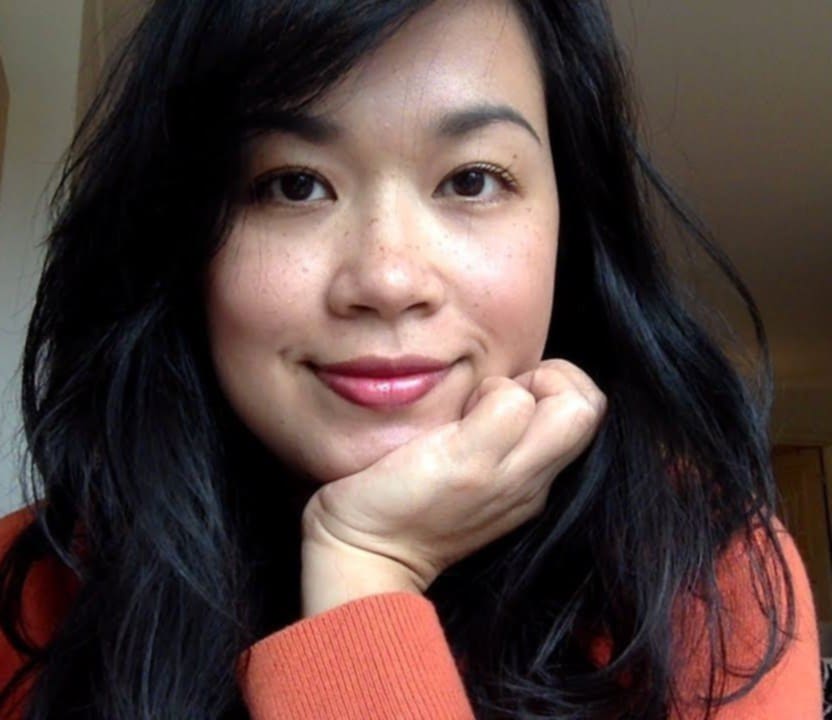
Systems thinker and storyteller. Founder of The Big Picture.
Cinthya Sopaheluwakan is a systems & strategy thinker, storyteller, provocateur, writer and speaker, focused on challenging dominant systems and narratives. Through The Big Picture, she supports organisations transitioning toward regenerative systems at the intersection of systems thinking, strategic intervention, and storytelling. With a background in physics, business, and sustainability, she brings an intersectional, intentional, imaginative and decolonial lens to her work.
Frequently Asked Questions
Do I need to have a writing portfolio to join?
No, you do not need to have a professional portfolio to join.
You Might Also Like
Creative Responses to Climate Collapse: Worldmaking with Art & Literature
Create and examine environmental art or literature that inspires a more life-affirming future.
 Karina Anastasia Mathew · Writer & Independent Educator Exploring Liberation Pedagogy
Writing Elsewhere Geographies
a collective (un)learning and generative writing space serving as a container for grief praxis | generative refusals | prefiguring for liberation | co-creating-curating liberatory present-futures
 Shraddha Shah, PhD · Neuroscientist | Writer | Activist
Creative Activism for Kincentric Justice
Decolonize, decarcerate, demilitarize and rebuild kincentric worlds.
 JuPong Lin, PhD · From the river to the sea, from mountain rainbow to darkest bed of soil, we shall all be free