Being Human: The Path for Change
Systems strip humanity away. We are disconnected. Our ability to flourish diminishes. How can we restore our humanity? How can we become more empathetic, loving, and hopeful to cultivate the conditions for change?
Course Overview
Political, economic, and communications systems strip humanity away, by turning us into data points, consumers, and users. Social media and digital technology have polluted everyday life making us more disconnected. The number of sophisticated artificial intelligence (AI) tools rapidly grows for doing simple and complex things like writing, communicating, thinking, calculating, analyzing, diminishing our ability to live fully and flourish. While we can do anything we set our mind to — learn, change, solve, adapt, survive, flourish — we choose to overvalue AI technologies rather than see them as complementary. Most people are racing to build coding capabilities and mastering AI. However, they struggle to engage in a face-to-face conversation with another person, be authentic to their values, imagine a better life, or empathize with a person who thinks differently.
We are forgetting how to be human — how to feel, to think, to listen, to imagine, to understand, to converse — which is limiting our capacity to care for others and envision more sustainable, fair, and diverse futures. We are angry and more impatient; we feel disconnected, hopeless, lonely, sad, and anxious.
To cultivate conditions for change — personal, community, organization, planetary change — we must embrace our humanity. Human skills are our interpersonal and intrapersonal capabilities that enable the development of our identity and interactions with others, which are unable to be replicated by technology.
This course is an invitation to be human and reconnect with the skills that make us unique as well as to live with compassion, responsibility, love, and empathy. Positive psychology frameworks and cognitive behavioral therapy strategies will equip you to engage in honest conversations with yourself and others. Futures literacy will enable deeper understanding and more diverse uses of the future to better navigate the present. Through dialogue-based learning, we will engage in mindfulness-based practices, digital detox strategies, and movement practices to make daily living more meaningful. You will gain mental clarity, feel more alive, and strengthen emotional intelligence. By becoming more present, you will engage in deeper listening and build more authentic relationships. This is a transformative experience back to our roots.
Who Is This Course For?
This course is designed for:
• Activists, educators, policy makers, leaders
• Healthcare professionals, therapists, healers
• Practitioners of any discipline
What You'll Learn
- Analyze the impact of economic, political, and communications systems on humanity
- Understand the fundamental principles of flourishing and essential human capabilities
- Examine conditions for change and the role of human skills
- Discover your emotional response patterns and thought structures, and how you can take control over them
- Develop confidence in your human skills — listening, imagining, conversing, empathizing, paying attention, collaborating — to build more authentic relationships and lead change
- Design an actionable blueprint rooted in human skills for radical change in your life, community, or the planet
What's Included
Live Sessions
Interactive classes with your instructor
Session Recordings
Lifetime access to all recordings
Community Access
Connect with fellow learners
Certificate
Proof of course completion
Real-World Project
You will reflect on personal learnings about your inner and outer interactions, and the role of external forces in your life — your community, the planet. Then you will create a blueprint rooted in human skills for radical change in your life, your community, your organization, or the planet. The blueprint can take the form of a short-term intervention or a long-term step-by-step plan. In the last day of class, you will prepare a short presentation sharing your blueprint and learnings about your journey.
Session Schedule
About the Instructor
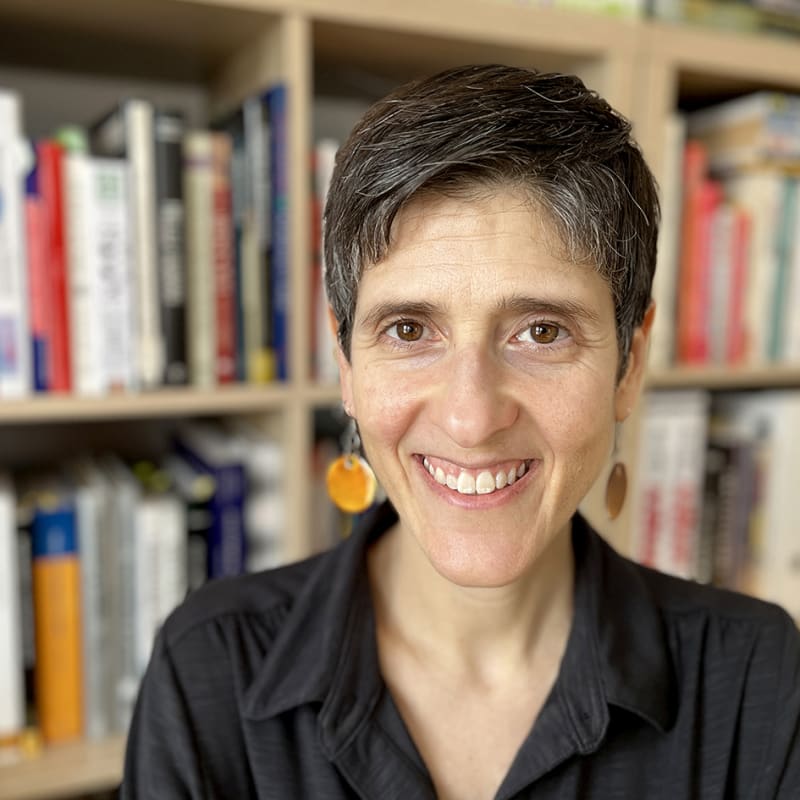
Professor & Researcher in Imagination, Wellbeing and Design
From an interdisciplinary perspective, my work contributes to the development of a flourishing society. I am a professor, researcher, and author in Imagination, Wellbeing, and Design with extensive leadership international experience in higher education and industry. After more than two decades working at leading institutions, including University College London, Princeton University, and MIT, now I empower individuals and communities from the inside out to unlock their unbound potential and experience the transformative benefits of imagination to embrace their human agency and build their dream future. My vision is a world where imagination and human flourishing are integral to each aspect of life and as high priority as work on other domains, such as climate change, AI, existential risk, politics. Through the Everyone Imagines initiative, I investigate the symbiotic connection between imagination and emotional wellbeing, and teach workshops and training worldwide, contributing to human infrastructure. My background as an information designer, combined with my expertise in human-centered research, Creative Problem Solving, mindfulness, and positive psychology, allows me to offer a unique approach to inner growth, imagination, and emotional wellbeing.
Get Notified
Sign up to be notified when registration opens.
Live Online
12 students max
4 sessions
90 min each